Practical Steps: Building 10 Cohesive 2026 Outfits from Your Existing Wardrobe in 30 Minutes
Advertisements
Staring at a closet full of clothes but feeling like you have nothing to wear is a universal frustration. In just half an hour, you can master the art of assembling 10 Cohesive 2026 Outfits using pieces you already own and love.
Stop scrolling for new trends and start shopping your own racks to discover hidden potential. By focusing on modern silhouettes and smart layering, you’ll transform your current collection into a series of fresh, intentional looks.
This streamlined approach eliminates morning decision fatigue while breathing new life into your personal style. Ready to revolutionize your daily rotation? Let’s curate a functional, high-fashion wardrobe in the time it takes to grab a coffee.
Advertisements
Understanding Your Wardrobe: The Foundation of Cohesive Outfits
Before embarking on the journey to build cohesive 2026 outfits, a foundational understanding of your current wardrobe is paramount.
This initial assessment involves more than just glancing at your clothes; it requires a deliberate review to identify key pieces and assess their condition and versatility.
This critical first step sets the stage for efficient outfit creation, ensuring that the 30-minute goal remains achievable.
Advertisements
Without this clarity, efforts to combine pieces might prove less effective, leading to frustration rather than stylish success. A clear inventory allows for strategic pairing and eliminates redundant items.
Many individuals overlook this crucial phase, diving directly into mixing and matching without a clear picture of their available resources.
A structured approach to wardrobe understanding, however, makes the subsequent steps of building cohesive 2026 outfits significantly smoother and more productive.
The Wardrobe Audit: What to Look For
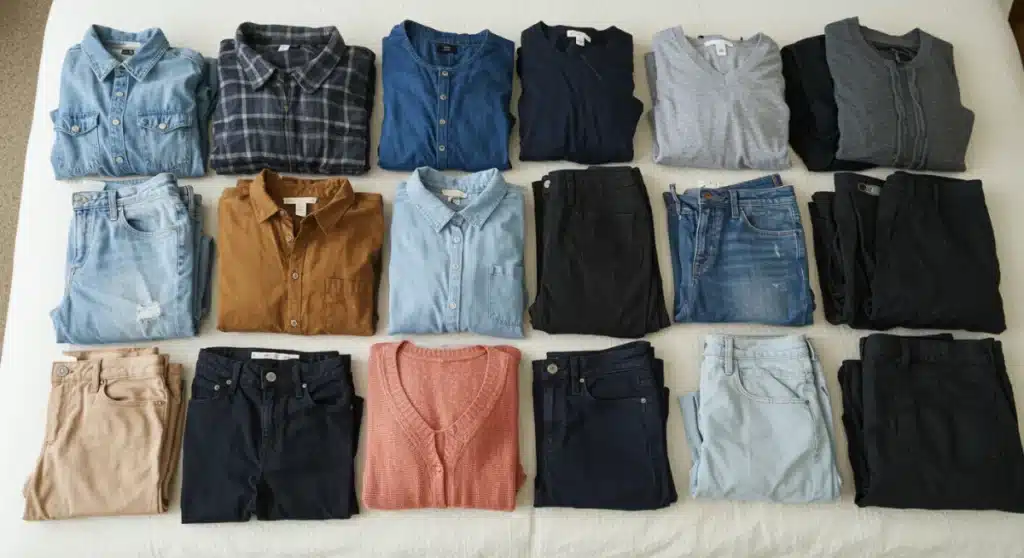
A thorough wardrobe audit begins with identifying foundational pieces. These are the versatile items that can be dressed up or down, forming the core of multiple outfits and providing a solid base for any style direction you choose.
Next, focus on statement pieces, items that add personality and flair but might require more thought in pairing. Understanding the balance between these two categories is key to building cohesive 2026 outfits that are both functional and expressive.
Finally, assess the condition of all garments; discard or repair anything that doesn’t meet your standards.
- Identify versatile basics: neutral tops, classic bottoms, simple outerwear.
- Pinpoint unique items: patterned skirts, brightly colored blazers, embroidered blouses.
- Evaluate garment condition: ensure all chosen items are clean, wrinkle-free, and in good repair.
- Categorize by season or occasion: group clothes that naturally go together for specific events.
Strategic Grouping: Maximizing Versatility for 2026 Outfits
Once your wardrobe is understood, the next practical step involves strategically grouping your garments to maximize their versatility.
This method moves beyond simple categorization, focusing on creating mini-collections within your existing wardrobe that can be easily interchanged.
The goal is to foster a modular approach to dressing, where each piece can potentially serve multiple roles across different outfits.
This strategic grouping significantly reduces the time spent deciding what to wear, directly contributing to the objective of building 10 cohesive 2026 outfits in 30 minutes. It’s about seeing your clothes as components of a larger, adaptable system.
This organized framework not only streamlines the outfit creation process but also highlights any gaps or redundancies in your collection.
By grouping items by color palette, fabric type, or intended use, you unlock new styling possibilities that might have previously gone unnoticed.
Color Palettes and Neutral Bases
Starting with a strong neutral base is fundamental to building cohesive 2026 outfits. Neutrals like black, white, gray, navy, and beige provide a versatile canvas upon which more colorful or patterned pieces can be layered without clashing.
Once your neutral base is established, introduce accent colors that complement each other and your personal style. Aim for a limited palette of 2-3 accent colors that can be easily mixed with your neutrals, ensuring harmony across your selected outfits.
This careful selection prevents visual clutter and promotes a polished aesthetic.
- Select 2-3 primary neutral colors for your core wardrobe.
- Choose 2-3 accent colors that harmonize with your neutrals and each other.
- Ensure each item can be paired with at least two other items from your chosen palette.
The 30-Minute Challenge: Rapid Outfit Creation
With your wardrobe understood and strategically grouped, the 30-minute challenge to build 10 cohesive 2026 outfits becomes an exciting and achievable task.
This segment focuses on the rapid, yet thoughtful, assembly of complete looks, emphasizing efficiency and creativity under time constraints.
The key here is to leverage the preparatory work, quickly identifying combinations that align with your chosen style and the desired cohesiveness.
This isn’t about perfection, but rather about generating a substantial number of viable outfits that can be refined later if needed. The time limit encourages decisive action and minimizes overthinking.
Approaching this challenge with a clear methodology ensures productivity and keeps you focused on the goal of creating 10 cohesive 2026 outfits.
By applying the principles of layering, accessory integration, and interchangeable pieces, you can swiftly transform individual garments into complete ensembles.
Methodical Pairing: Tops, Bottoms, and Layers
Begin by selecting 3-4 versatile tops and 2-3 adaptable bottoms from your strategically grouped items. These form the core pairings, allowing for immediate combinations that serve as the initial foundation for your 10 cohesive 2026 outfits.
Next, introduce layering pieces such as cardigans, blazers, or light jackets that can transform the basic pairings into different looks suitable for varying temperatures or occasions.
Consider how each layer alters the outfit’s aesthetic, from casual to more formal. This step rapidly expands your outfit count without adding new items.
Finally, integrate accessories like scarves, belts, or statement jewelry to personalize each look and add a finished touch. Accessories are powerful tools for subtly changing an outfit’s vibe, making each of your 10 cohesive 2026 outfits distinct and polished. 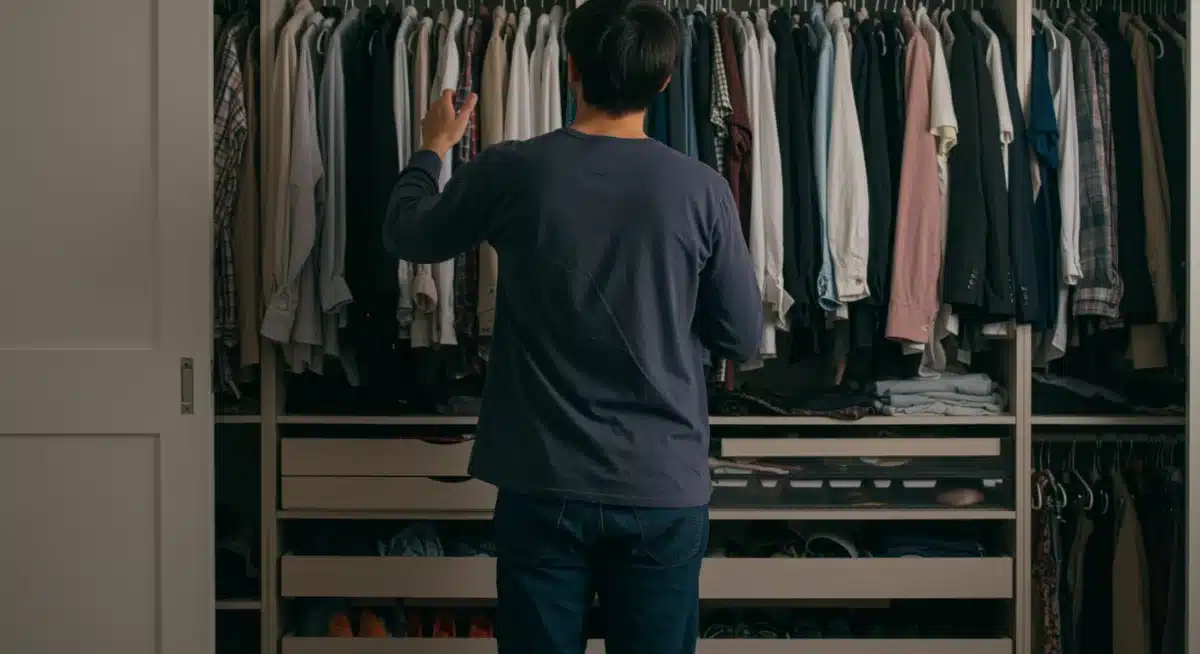
Accessory Integration: Elevating Your 2026 Outfits
Accessories are often underestimated in their power to transform and elevate an outfit. For those looking to build 10 cohesive 2026 outfits from an existing wardrobe, strategic accessory integration is a non-negotiable step.
They provide the finishing touches that can dramatically alter the perception of an ensemble.
The right accessories can transition an outfit from day to night, casual to formal, or simply add a touch of personal flair. This careful selection ensures that even with a limited clothing palette, each of your 10 cohesive 2026 outfits feels fresh and distinct.
It’s about maximizing impact with minimal additions, leveraging what you already own.
Focusing on accessories allows for a cost-effective and creative way to diversify your looks without needing new garments. Belts, scarves, jewelry, and even different shoes can reinvent an outfit, making the process of building cohesive 2026 outfits both enjoyable and efficient.
The Power of Belts and Scarves
Belts can define a silhouette, add a pop of color, or introduce texture to an outfit. A simple dress or oversized shirt can be instantly transformed with the addition of a well-chosen belt, creating a more structured and polished look.
Scarves, on the other hand, offer unparalleled versatility. They can be worn around the neck, as a headwrap, tied to a handbag, or even incorporated as a makeshift belt.
Each method provides a different aesthetic, allowing for numerous variations within your 10 cohesive 2026 outfits. Their ability to introduce color and pattern is invaluable.
- Utilize belts to cinch waists and create definition in otherwise loose garments.
- Experiment with different scarf tying techniques to vary necklines and add visual interest.
- Consider how a scarf’s pattern or color complements the overall palette of an outfit.
Footwear and Bags: Completing the Cohesive Look
The choice of footwear and bags plays a pivotal role in completing and defining the overall aesthetic of your 10 cohesive 2026 outfits. These elements are not merely functional; they are crucial components that can significantly influence an outfit’s formality and style.
A single outfit can convey entirely different messages depending on whether it’s paired with sneakers, heels, or boots.
Similarly, a structured handbag versus a casual tote can shift the entire mood. Strategic selection of these items ensures that your cohesive 2026 outfits are appropriate for various occasions and personal preferences.
Investing time in pairing the right shoes and bags with your chosen garments will elevate the perceived value and intentionality of each ensemble. This attention to detail is what transforms a collection of clothes into truly cohesive and impactful outfits. 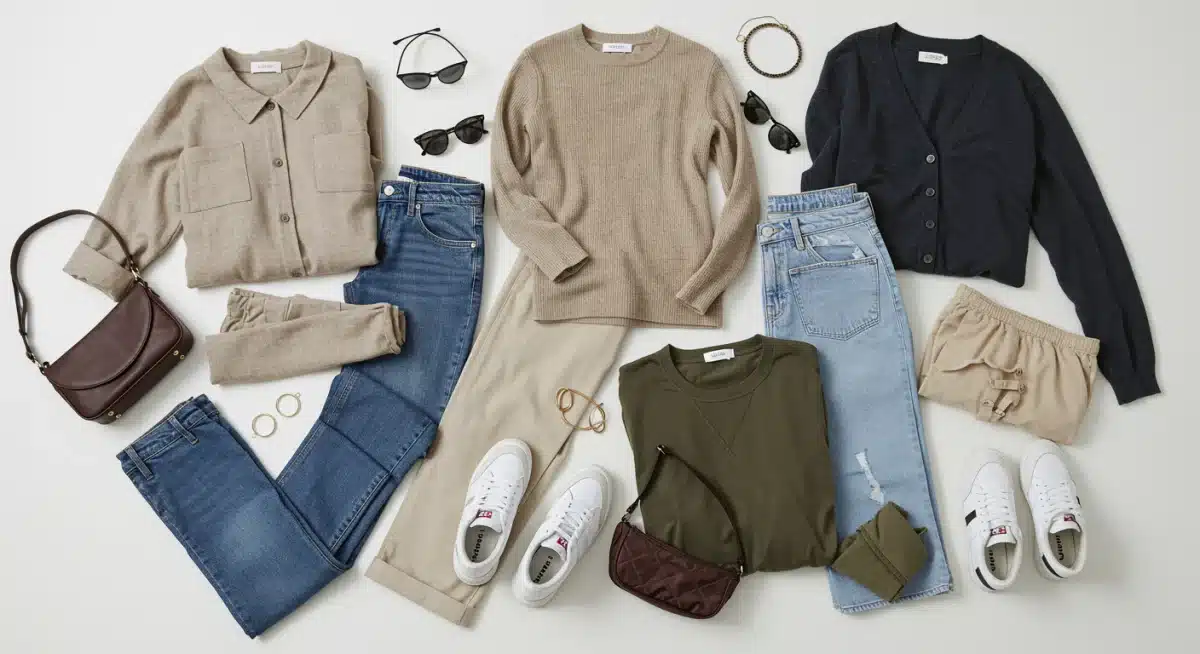
Mixing and Matching Footwear and Bags
Start with your most versatile shoes and bags, those in neutral colors and classic styles that pair well with most of your wardrobe. These foundational pieces will form the backbone of many of your 10 cohesive 2026 outfits, providing reliability and ease of use.
Next, consider how a pop of color or a unique texture in a shoe or bag can instantly refresh a familiar outfit.
Don’t be afraid to experiment with unexpected combinations; sometimes, the contrast creates the most interesting and memorable looks. This creative approach breathes new life into your existing pieces.
- Identify 2-3 go-to pairs of shoes that cover various formalities (e.g., sneakers, flats, heels).
- Select 2 versatile bags (e.g., a structured tote, a crossbody) that complement your wardrobe.
- Experiment with one statement shoe or bag to inject personality into simpler outfits.
Seasonal Adaptations: Extending Your 2026 Outfits
Building 10 cohesive 2026 outfits isn’t a one-time endeavor; it involves an understanding of how to adapt these looks across different seasons.
The same core pieces can be transformed with strategic layering and accessory changes, ensuring your wardrobe remains functional and stylish year-round.
This adaptability is crucial for maximizing the utility of your existing wardrobe and further reinforcing the concept of conscious consumption.
By thinking seasonally, you unlock even more potential from your chosen outfits, making them relevant for varying weather conditions and seasonal trends. It’s about smart utilization, not constant acquisition.
Considering seasonal adaptations from the outset ensures longevity and versatility for your cohesive 2026 outfits.
This forward-thinking approach means less stress when seasons change and more confidence in your ability to dress appropriately and stylishly, regardless of the temperature.
Layering for Different Climates
For colder months, focus on thermal layers that can be worn discreetly under your existing garments without adding bulk. Think thin merino wool tops or thermal leggings that provide warmth without compromising the outfit’s silhouette.
As temperatures rise, shed heavier layers and swap them for lighter fabrics like linen or cotton. A simple shift from a wool blazer to a lightweight cardigan can completely change an outfit’s seasonal suitability.
This mindful layering technique allows your 10 cohesive 2026 outfits to transition seamlessly.
- Incorporate lightweight scarves and cardigans for transitional weather.
- Utilize thermal wear under existing garments for added warmth in winter.
- Swap heavy fabrics for breathable materials like cotton or linen in warmer seasons.
Documenting Your Outfits: Your Personal Lookbook
Once you have successfully built 10 cohesive 2026 outfits, documenting them is a crucial step for long-term organization and efficiency. Creating a personal lookbook, whether digital or physical, serves as a quick reference guide, eliminating decision-making time on busy mornings.
This documentation ensures that the effort invested in creating these outfits is fully leveraged, making it easier to recall successful combinations and replicate them effortlessly.
It transforms a one-time exercise into a sustainable system for daily dressing. A well-maintained lookbook is invaluable for consistent style.
A personal lookbook also provides a visual record of your style evolution and helps identify which combinations truly resonate with you.
This curated collection of 10 cohesive 2026 outfits acts as a testament to your ability to maximize your existing wardrobe, promoting smart and sustainable fashion practices.
Digital vs. Physical Lookbooks
For a digital lookbook, take clear photos of each of your 10 cohesive 2026 outfits and store them in a dedicated album on your phone or a cloud service. This allows for easy access and quick browsing, especially when planning outfits on the go or when traveling.
Alternatively, a physical lookbook can involve printing photos and organizing them in a binder, perhaps with notes on occasions or styling tips for each outfit.
This tactile approach offers a different kind of engagement and can be particularly useful for those who prefer tangible references when dressing.
- Use a smartphone camera to capture full-length shots of each outfit.
- Organize photos into a dedicated album on your device or a Pinterest board.
- Add brief notes on occasions, accessory pairings, or layering options for each look.
Maintaining Cohesion: Long-Term Wardrobe Strategies
Beyond the initial creation of 10 cohesive 2026 outfits, maintaining that cohesion requires ongoing strategic effort. This involves periodic reviews, mindful additions, and a consistent approach to organization, ensuring your wardrobe continues to serve your style needs effectively.
Long-term cohesion is not about rigid adherence to a formula but rather about an adaptable framework that evolves with your personal style and external trends.
Regular assessment prevents clutter and ensures that every item in your wardrobe contributes meaningfully to your overall aesthetic. This proactive approach saves time and money in the long run.
By integrating these maintenance strategies, you transform the act of building cohesive 2026 outfits into a sustainable lifestyle practice. It fosters a deeper appreciation for your existing clothing and encourages thoughtful consumption, aligning with modern fashion values.
Regular Wardrobe Reviews and Mindful Additions
Schedule quarterly or bi-annual wardrobe reviews to assess the relevance and condition of your items. During these reviews, identify pieces that no longer fit, are beyond repair, or simply don’t align with your current style.
This ensures that your wardrobe remains curated and functional for your 10 cohesive 2026 outfits.
When considering new purchases, adopt a mindful approach. Ask yourself if a new item truly complements your existing wardrobe and enhances your ability to create more cohesive 2026 outfits, rather than just being a fleeting trend.
Prioritize quality and versatility over quantity, making conscious choices that support your long-term style goals.
- Conduct seasonal purges to remove unworn or damaged items.
- Before buying new clothes, consider how they integrate with your existing outfits.
- Focus on versatile, high-quality pieces that enhance your current wardrobe.
| Key Strategy | Benefit |
|---|---|
| Wardrobe Audit | Identifies key pieces and condition, forms outfit foundation. |
| Strategic Grouping | Maximizes versatility, streamlines rapid outfit creation. |
| Accessory Integration | Elevates looks, adds personality without new clothing. |
| Outfit Documentation | Provides quick reference, ensures long-term efficiency. |
Frequently Asked Questions About Cohesive 2026 Outfits
Begin by decluttering. Remove anything that doesn’t fit, is damaged, or hasn’t been worn in a year. Then, categorize your remaining items by type (tops, bottoms, dresses) and color. This initial organization will provide a clear overview and make the process of selecting cohesive 2026 outfits much simpler and faster.
Yes, absolutely. The key is thorough preparation: auditing your wardrobe and strategically grouping items beforehand. During the 30 minutes, focus on rapid pairing of tops, bottoms, and layers, quickly adding accessories. Don’t aim for perfection initially; aim for viable combinations to build 10 cohesive 2026 outfits effectively.
Focus on maximizing the versatility of your current pieces. Experiment with different layering techniques, try new accessory combinations, and consider how a simple belt or scarf can transform an outfit. Often, perceived lack of variety stems from not exploring all possible combinations of your existing cohesive 2026 outfits.
Accessories are incredibly important. They can completely alter the mood and formality of an outfit without requiring new clothing items. Strategic use of belts, jewelry, scarves, and bags can add personality, define silhouettes, and make each of your 10 cohesive 2026 outfits feel distinct and polished. They are essential for cohesion.
Build your core wardrobe around timeless, versatile pieces that transcend fleeting trends. Incorporate current trends through easily interchangeable accessories like scarves, jewelry, or shoes. This allows your foundational 10 cohesive 2026 outfits to remain relevant while still allowing you to embrace new styles without constant overhauls.
Looking Ahead: Sustainable Style Evolution
The ability to create 10 cohesive 2026 outfits from an existing wardrobe in a short timeframe represents a significant shift towards more mindful and sustainable fashion practices.
This approach not only provides immediate style solutions but also cultivates a deeper understanding of personal style and wardrobe potential. It underscores the value of strategic planning over impulsive consumption.
As fashion continues to evolve, the emphasis on versatility and longevity will only grow. Mastering the techniques for building cohesive 2026 outfits empowers individuals to adapt to these changes without constantly acquiring new items.
This forward-thinking strategy ensures that personal style remains dynamic, relevant, and environmentally conscious for the foreseeable future.