AI’s Impact on Fashion Design: Shaping Future Collections
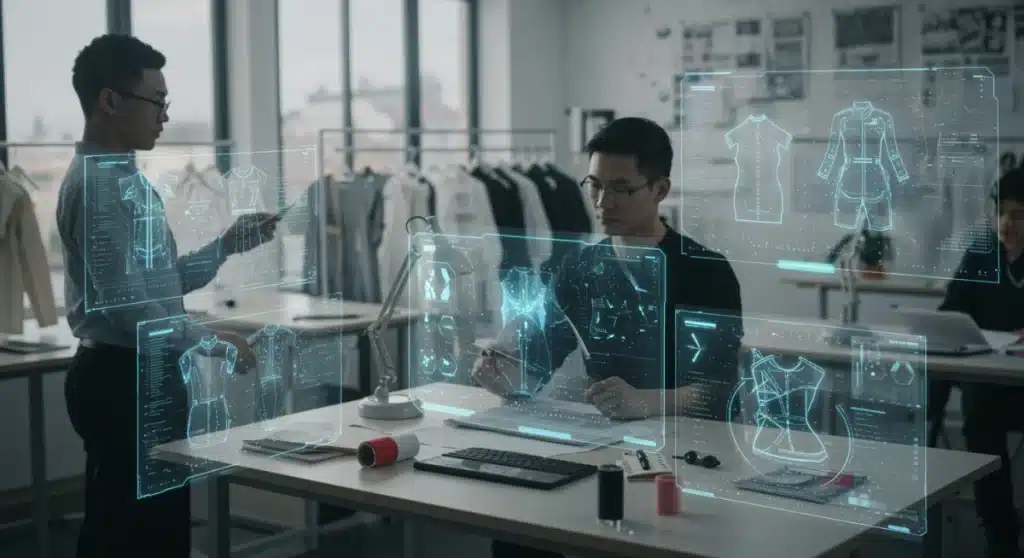
Artificial intelligence is fundamentally transforming the fashion design process for upcoming collections, offering unprecedented tools for trend prediction, material sourcing, and personalized creation, thereby enhancing efficiency and fostering innovation.
The fashion industry, long driven by intuition and artistic vision, is currently undergoing a profound transformation. The integration of artificial intelligence (AI) is rapidly redefining how designers approach their craft, particularly when it comes to conceptualizing and executing upcoming collections. This technological evolution is not merely an enhancement; it’s a paradigm shift, offering new avenues for creativity, efficiency, and sustainability.
AI’s Role in Trend Forecasting and Market Analysis
One of the most significant contributions of AI to fashion design lies in its unparalleled ability to analyze vast datasets for trend forecasting. Gone are the days when designers relied solely on instinct or limited market research. AI algorithms can sift through social media trends, sales data, runway shows, and even geopolitical events to predict consumer preferences with remarkable accuracy.
This predictive power allows designers to make informed decisions about color palettes, silhouettes, and fabric choices, ensuring that upcoming collections resonate deeply with their target audience. The result is a more data-driven design process, reducing the risks associated with traditional trend spotting.
Predictive Analytics for Consumer Behavior
AI’s capacity to predict consumer behavior is a game-changer. By analyzing historical purchasing patterns, online interactions, and even sentiment analysis from product reviews, AI can identify emerging micro-trends that might otherwise go unnoticed. This granular insight enables brands to tailor collections to specific demographics or even individual preferences.
- Identifying nascent color trends before they become mainstream.
- Forecasting demand for specific garment types or accessories.
- Understanding regional style variations and preferences.
- Pinpointing the lifespan of a trend, optimizing production cycles.
The integration of predictive analytics means designers are no longer operating in a vacuum; they are equipped with actionable intelligence that can guide their creative direction. This not only optimizes resource allocation but also minimizes waste by producing items that are more likely to sell.
Revolutionizing Material Innovation and Sustainability
The fashion industry faces increasing pressure to adopt sustainable practices. AI is proving to be an invaluable ally in this endeavor, particularly in the realm of material innovation and responsible sourcing. From discovering eco-friendly textiles to optimizing supply chains, AI is paving the way for a greener future in fashion.
AI algorithms can analyze the properties of various materials, simulate their performance, and even suggest novel combinations that meet both aesthetic and environmental criteria. This accelerates the development of sustainable fabrics and reduces the reliance on traditional, often resource-intensive, materials.
AI-Driven Sustainable Material Discovery
The search for sustainable materials is complex, involving countless variables related to production, durability, and end-of-life impact. AI can process this complexity, identifying materials with lower environmental footprints or even designing entirely new bio-based textiles with desired characteristics. This drastically cuts down research and development time.
- Discovering new biodegradable or recyclable fabric compositions.
- Optimizing dyeing processes to reduce water and chemical usage.
- Simulating material wear and tear to enhance product longevity.
- Identifying ethical sourcing options for raw materials globally.
By leveraging AI, designers can make more informed choices about the materials they incorporate into their collections, moving towards a circular economy where waste is minimized and resources are conserved. This shift is critical for both environmental stewardship and consumer appeal.
Enhancing Creative Exploration and Design Generation
While some might fear AI replacing human creativity, its true potential lies in augmenting it. AI tools are becoming powerful collaborators for designers, enabling them to explore design possibilities at an unprecedented scale and speed. From generating initial sketches to creating intricate patterns, AI expands the creative horizon.
Generative AI, in particular, can produce countless design variations based on a designer’s input, offering fresh perspectives and inspiring new directions. This allows designers to experiment more freely, pushing the boundaries of traditional aesthetics and form.
Generative Design for Unique Aesthetics
Generative design systems, powered by AI, can create novel patterns, prints, and even garment silhouettes that might not have been conceived by human designers alone. By defining a set of parameters, designers can prompt AI to generate a multitude of options, providing a rich source of inspiration. This iterative process fosters innovation and helps designers overcome creative blocks.
AI can also assist in the detailed aspects of design, such as creating seamless repeats for fabric prints or developing intricate embroidery patterns. This streamlines the technical aspects of design, allowing designers to focus more on conceptualization and artistic expression.

Streamlining the Design Workflow and Prototyping
The traditional design process involves numerous time-consuming steps, from initial sketches to physical prototypes. AI is dramatically streamlining these workflows, reducing lead times and accelerating the journey from concept to market. This efficiency is crucial in the fast-paced fashion industry, where speed to market can be a significant competitive advantage.
Virtual prototyping, powered by AI and 3D modeling, allows designers to visualize and test garments in a digital environment before any physical samples are made. This not only saves time and resources but also significantly reduces material waste associated with multiple physical iterations.
Virtual Prototyping and Fit Optimization
AI-driven virtual prototyping tools can simulate how a garment will drape, move, and fit on different body types and sizes. This advanced simulation allows designers to identify and correct design flaws early in the process, ensuring a better fit and reducing the need for costly physical samples. The accuracy of these simulations continues to improve, making them indispensable for modern design houses.
- Real-time visualization of garment fit and movement on digital avatars.
- Rapid iteration of design changes without physical production.
- Cost reduction by minimizing the creation of multiple physical samples.
- Improved inclusivity through testing designs on diverse body shapes.
The ability to iterate quickly and efficiently in a virtual space empowers designers to refine their visions with greater precision, bringing higher quality and better-fitting garments to market faster. This also enables a more sustainable approach to product development.
Personalization and Customization at Scale
In an increasingly consumer-centric market, personalization and customization are key differentiators. AI empowers fashion brands to offer bespoke experiences to their customers, moving beyond mass production towards a more individualized approach. This capability is transforming how collections are conceived and delivered.
AI can analyze individual customer data—including purchase history, style preferences, and body measurements—to recommend personalized designs or even generate custom-fit garments. This level of individualization was previously unachievable at scale.
AI-Powered Custom Design and Recommendations
From personalized styling suggestions to custom-designed garments based on a customer’s unique specifications, AI makes it possible. AI algorithms can learn individual style preferences and suggest modifications to existing designs or create entirely new ones that align with a customer’s taste. This fosters a deeper connection between the brand and the consumer.
Furthermore, AI can facilitate mass customization, where customers can personalize aspects of a garment, such as color, fabric, or embellishments, before production. This not only enhances customer satisfaction but also reduces overproduction by creating items only when there is confirmed demand.
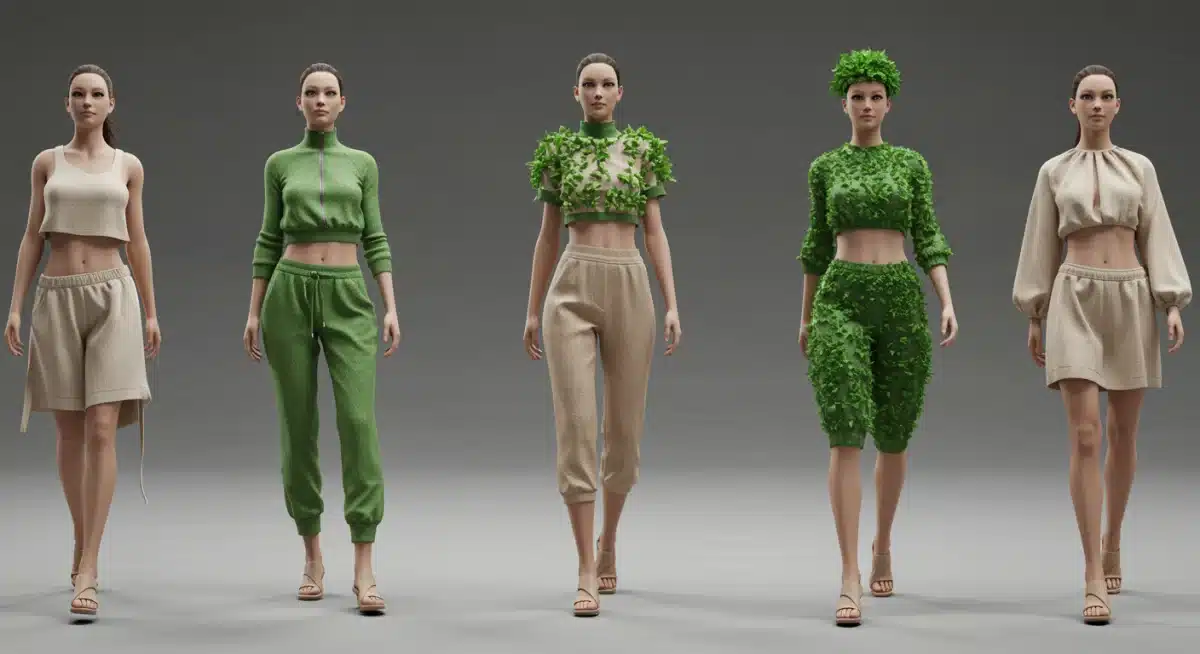
Challenges and the Human Element in AI-Driven Design
While the benefits of AI in fashion design are undeniable, its integration is not without challenges. Ethical considerations, data privacy, and the potential for homogenization of design are important aspects that need careful consideration. Moreover, the indispensable role of human creativity remains central.
The fashion industry thrives on innovation and the unique vision of its designers. AI serves as a powerful tool to amplify this vision, not to replace it. The challenge lies in finding the optimal balance between technological efficiency and artistic integrity, ensuring that AI enhances rather than diminishes human creativity.
Maintaining Creativity and Ethical AI Use
One of the primary concerns is the risk of AI leading to a convergence of styles, where algorithms, trained on similar datasets, might produce similar aesthetic outputs. Designers must actively guide AI, infusing their unique perspective to ensure originality. The human designer acts as the curator and visionary, steering the AI towards novel and distinctive creations.
- Ensuring data diversity to prevent algorithmic bias in design.
- Protecting intellectual property in AI-generated designs.
- Training designers to effectively collaborate with AI tools.
- Establishing ethical guidelines for AI’s influence on fashion consumption.
Ultimately, the successful integration of AI into fashion design hinges on a collaborative approach. Designers who embrace AI as a co-creator, rather than a competitor, will be at the forefront of shaping the future of fashion collections. The future is a synergy of human ingenuity and artificial intelligence.
| Key Impact Area | Brief Description of AI’s Influence |
|---|---|
| Trend Forecasting | AI analyzes vast datasets to predict consumer trends, informing design choices for upcoming collections. |
| Material Innovation | AI assists in discovering and developing sustainable materials, optimizing their properties and sourcing. |
| Design Generation | Generative AI tools create novel patterns, prints, and silhouettes, expanding creative possibilities for designers. |
| Workflow Optimization | AI-driven virtual prototyping and 3D modeling streamline design processes, reducing time and waste. |
Frequently Asked Questions About AI in Fashion Design
AI predicts fashion trends by analyzing vast amounts of data, including social media posts, sales figures, fashion show reviews, and even news articles. It identifies patterns and emerging preferences, providing designers with data-driven insights into future consumer demands and style directions.
No, AI is not expected to replace human fashion designers. Instead, it serves as a powerful tool that augments human creativity and efficiency. AI can handle repetitive tasks, generate variations, and provide data insights, allowing designers to focus on conceptualization, artistic vision, and intricate problem-solving.
AI significantly contributes to sustainability by optimizing material selection, reducing waste through virtual prototyping, and improving supply chain efficiency. It can identify eco-friendly materials, predict demand to prevent overproduction, and even design garments for circularity, minimizing environmental impact.
AI enables personalized fashion by analyzing individual customer data, such as purchase history, style preferences, and body measurements. This allows brands to offer tailored recommendations, custom-designed garments, and mass customization options, creating unique products that cater to specific consumer tastes.
Challenges include ensuring data privacy, avoiding design homogenization, and addressing ethical concerns related to AI’s influence. Designers must also adapt to new tools and maintain their unique creative voice while collaborating with AI, ensuring technology enhances rather than dictates artistic expression.
Conclusion
The integration of artificial intelligence into the fashion industry marks a pivotal moment, fundamentally reshaping the design process for upcoming collections. From sophisticated trend forecasting and groundbreaking material innovation to streamlined workflows and hyper-personalized offerings, AI is proving to be an indispensable ally for designers. While challenges such as ethical considerations and the preservation of human creativity persist, the synergy between human ingenuity and artificial intelligence promises a future where fashion is more efficient, sustainable, and creatively boundless. Designers who embrace this technological evolution will undoubtedly lead the charge in defining the next era of style and innovation.