
Understanding Balenciaga architectural tailoring
Advertisements
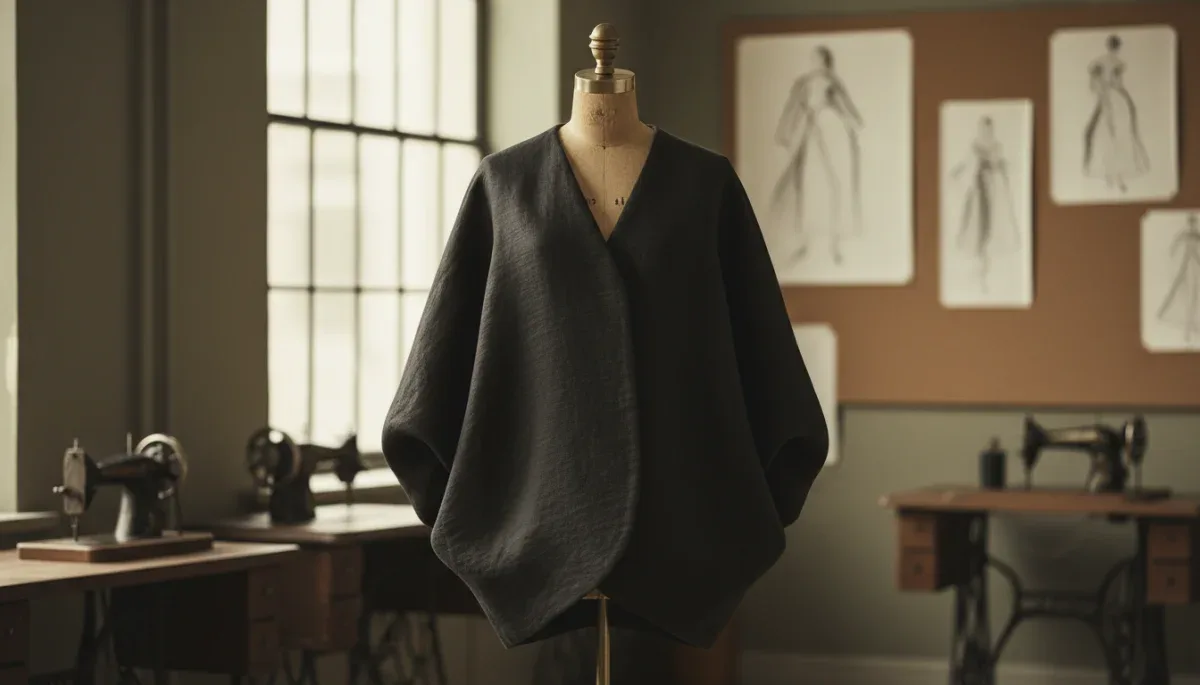
Cristóbal Balenciaga redefined fashion by approaching garment construction as an architectural discipline, building standalone three-dimensional forms that suspended away from the body rather than clinging to its contours. This tailoring philosophy prioritized pure proportion, geometric balance, and structural integrity, establishing a completely new relationship between fabric, space, and the human anatomy.
This approach benefits design students, tailoring enthusiasts, and modern dressers seeking to understand how silhouette shapes personal style without relying on constrictive inner framing. The primary challenge in studying this work lies in appreciating how subtle alterations in seam curvature, fabric tension, and balance points create dramatic volume without adding physical weight or restricting movement.
The departure from conventional mid-century corsetry
During the mid-twentieth century, Western womenswear was dominated by tight waists, padded busts, and rigid interior corsetry. While contemporary fashion houses focused on cinching the body to force it into predetermined proportions, Balenciaga took the opposite approach. He treated tailoring as a structural craft where the garment established its own independent silhouette, eliminating the need for rigid internal scaffolding or heavily boned foundations.
Advertisements
By shifting structural support from the waist to the shoulders and the nape of the neck, he allowed garments to stand away from the torso. This structural shift introduced ease of movement and physical comfort to haute couture without sacrificing formality. The garment no longer depended on the wearer having a specific body shape; instead, the tailored architecture flattered diverse figures by creating an intentional perimeter of negative space around the wearer.
Core principles of non-restrictive construction
- Weight distribution: Garment weight is balanced directly across the clavicle and upper back to prevent pulling at the waistline.
- Negative space: A controlled void between the textile and the skin creates ventilation, freedom of movement, and visual volume.
- Elimination of interior hardware: Structured silhouettes rely on precise seam angles and textile density rather than metal stays or heavy stays.
Iconic architectural silhouettes and geometric volume
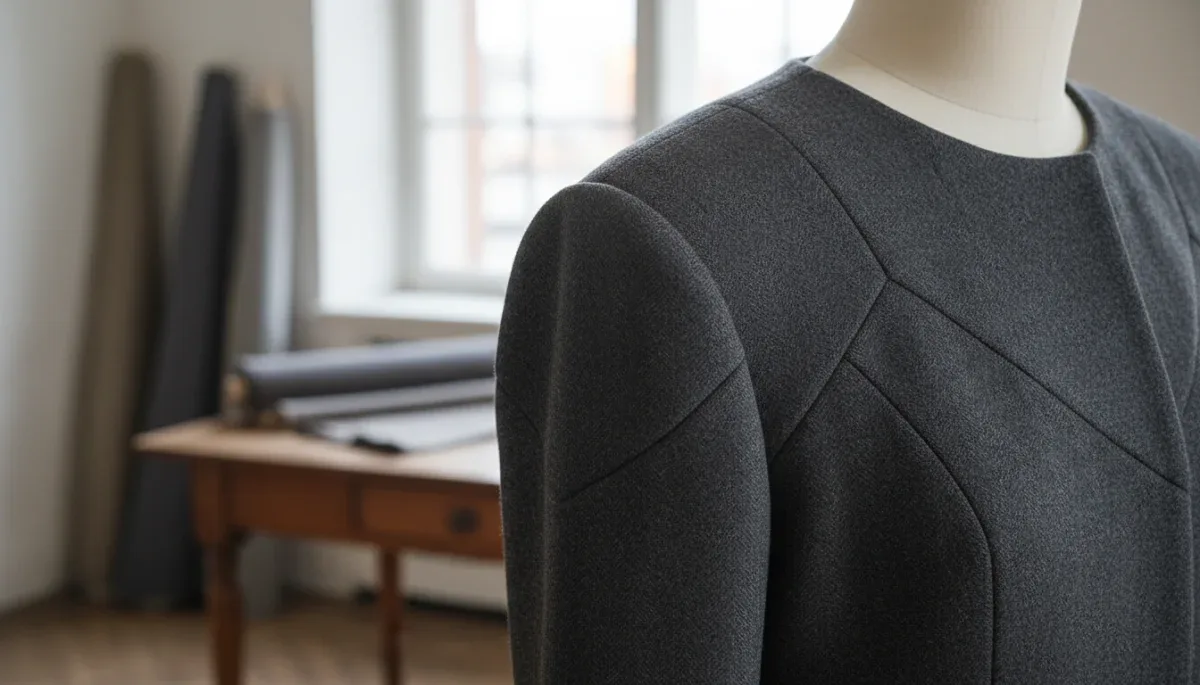
Between 1947 and 1968, Balenciaga unveiled a sequence of revolutionary shapes that systematically dismantled standard tailoring conventions. Rather than following the natural contours of the waist and hips, these designs introduced pure geometric archetypes to high fashion. The barrel line, the sack dress, the cocoon coat, and the baby doll dress each presented a distinct exercise in volume manipulation and structural balance.
The sack dress, introduced in 1957, shocked critics because it eliminated waist suppression entirely, letting a smooth curve of fabric cascade from the shoulder blades down to the hem. Similarly, the cocoon coat utilized arched outer side seams and curved raglan sleeves to envelop the body in an elliptical dome. Each shape was calculated to remain stable while walking, proving that garments could hold their intended geometric volume dynamically without collapsing against the body.
Advertisements
These designs demonstrated that clothing could exist as sculptural art while fulfilling practical functions. The visual impact came not from applied surface decorations, beads, or embroidery, but from the purity of the outline and the architectural clarity of the finished piece.
Textile engineering and the creation of silk gazar
Balenciaga understood that architectural tailoring required textiles with specific mechanical properties: lightness, density, and the ability to hold a pre-shaped curve under tension. Traditional wools and silks often proved either too soft to hold structural shapes or too heavy to wear comfortably across full-day events. To solve this limitation, he collaborated closely with Swiss fabric manufacturer Abraham in the late 1950s to engineer entirely new textiles.
Their most significant breakthrough was silk gazar, a high-twist, double-woven silk characterized by a crisp, papery hand and exceptional structural memory. Gazar provided sufficient tensile strength to hold sharp pleats, cantilevered collars, and curved hems aloft without requiring multiple layers of interlining. This textile innovation made complex shapes, such as the trapezoid and the tulip skirt, viable in formalwear.
Essential fabrics used in structural tailoring
- Silk gazar: A stiff yet lightweight open-weave silk ideal for freestanding volumes and architectural evening pieces.
- Heavy silk faille: A ribbed textile providing clean drape and sharp creasing along directional grainlines.
- Dense wool double-cloth: A self-supporting, reversible fabric that allows for clean, unlined edges and seamless finishes.
- Textured cloqué: A jacquard-woven fabric with puckered surface tension that adds depth to minimalist silhouettes.
Mastery of pattern cutting and seamless construction
Unlike many couturiers who worked purely through sketching and left execution to atelier staff, Balenciaga was a master pattern cutter and tailor who could draft, cut, assemble, and fit every design by hand. His deep technical knowledge allowed him to eliminate traditional seamlines, creating garments from single continuous pieces of fabric or reducing construction lines to the absolute minimum required for structural stability.
A prime example of this mastery was his one-seam coat, engineered from a single length of fabric folded and seamed along a single structural axis. He also developed revolutionary sleeve settings, designing the front of a sleeve as a continuous extension of the bodice while setting the back as a traditional inset sleeve. This hybrid construction created a smooth, monolithic appearance from the front while providing full arm mobility through the back gusset.
He frequently removed collar bands from jackets and coats, creating stand-away necklines that framed the neck without touching it. These technical choices were not arbitrary styling flourishes; they were calculated pattern modifications engineered to distribute fabric stress evenly across the garment skeleton.
The integration of Spanish cultural geometry
The architectural discipline in Balenciaga's work was deeply rooted in the cultural visual landscape of his native Spain. Elements from regional folk dress, ecclesiastical vestments, and traditional bullfighting costumes consistently informed his structural shapes. Rather than copying these garments literally, he extracted their core geometric logic and translated it into modern tailoring terms.
The rigid simplicity of Catholic clerical robes inspired his stand-away collars and unembellished, monastic evening gowns. The curved silhouette of the bullfighter's bolero jacket influenced his cropped evening capes and waist-length outer layers, which balanced the generous volumes of his bell-shaped skirts. These references provided his tailoring with a solemn, statuesque dignity that contrasted with the more decorative, fluid styles popular in Paris during the same era.
By blending traditional artisanal methods with minimalist modern geometry, he created garments that felt both historic and forward-looking. This rigorous visual purity cemented his reputation as an architect of couture whose work transcended seasonal trends.
Enduring influence on modern tailoring and fashion
The legacy of Balenciaga's architectural philosophy extends far beyond twentieth-century couture archives. His pupils, including Hubert de Givenchy, Emanuel Ungaro, and André Courrèges, carried these construction principles into subsequent fashion eras, helping establish the minimalist and Space Age movements of the 1960s and 1970s. Modern luxury tailoring continues to build directly upon his foundational work regarding volume, drop shoulders, and non-restrictive sizing.
Contemporary patternmakers study his archival work to understand how to design garments that accommodate movement without relying on synthetic stretch fibers. The modern prevalence of oversized tailoring, boxy overcoats, and cocoon silhouettes traces directly back to the spatial experiments developed in his Paris atelier on Avenue George V.
Balenciaga demonstrated that tailoring could prioritize form and structural honesty over decorative surface embellishment. By proving that fabric can be sculpted to stand away from the body, he permanently expanded the possibilities of garment construction and modern personal styling.
At a glance
| Tailoring principle | Core design characteristic |
|---|---|
| Weight distribution | Suspended from the shoulders and neck rather than cinched at the waistline. |
| Negative space | Intentional air gaps between fabric and body provide volume and ease of movement. |
| Fabric selection | Reliance on self-supporting, high-twist textiles like silk gazar and wool double-cloth. |
| Pattern precision | Minimalist seam placement and hybrid sleeves combine clean lines with functional mobility. |
Frequently asked questions
What is architectural tailoring in fashion design?
Architectural tailoring is a garment construction method where clothing holds a distinct, three-dimensional geometric shape independent of the wearer's body. It relies on precise pattern angles, textile tension, and balanced weight distribution rather than rigid internal boning or skin-tight tailoring.
Why did Cristóbal Balenciaga avoid standard corsetry?
Balenciaga avoided standard corsetry because he believed garments should grant the wearer physical freedom while creating elegant silhouettes. By engineering standalone structural shapes that rested on the shoulders, he eliminated the need to squeeze or contort the torso.
What makes silk gazar unique in tailoring?
Silk gazar is unique because it combines extreme lightness with structural rigidity and memory. Developed by Abraham for Balenciaga, its high-twist weave allows couturiers to build large, architectural volumes and sharp structural folds without adding physical weight or heavy interfacings.
How can someone identify Balenciaga-inspired tailoring today?
Look for stand-away collars, cocoon-shaped outer seams, seamless front shoulders, and waistlines that fall freely away from the body. Garments influenced by his work prioritize clean structural outlines, minimal surface decoration, and balanced negative space around the torso.
The bottom line
Cristóbal Balenciaga transformed couture into a structural craft by proving that garments could hold dramatic, freestanding shapes without constricting the body. By mastering pattern geometry, developing resilient textiles like silk gazar, and using negative space intentionally, he laid the structural foundations for modern luxury tailoring. Before buying or styling architectural garments, check the textile weight and shoulder fit to ensure the silhouette maintains its structure naturally while you move.
Written by
Lucas Bastos
Lucas Bastos writes about fashion tips, seasonal collections and designer spotlights for getclothez.com. Each article explains how things work, compares published details such as prices, policies and program rules, and points readers to the official source before they decide.