
How to transition summer dresses for fall with thermal layers

Advertisements
You can transition summer dresses for fall by wearing ultra-thin thermal base layers beneath the dress and adding structured outerwear over it. This technique allows you to keep wearing lightweight cotton, silk, and linen pieces in dropping temperatures without sacrificing warmth or creating excessive bulk.
This approach helps anyone looking to extend the seasonal lifespan of their wardrobe while keeping closet turnover low, though it requires attention to fabric friction and silhouette balance to avoid bunching and static cling.
Selecting the right thermal base fabrics
The foundation of transitional dressing rests on fabric technology. Traditional cold-weather undergarments are often thick and ribbed, which can cause summer fabrics to catch, pull, or distort. To preserve the drape of light dresses, look for base layers made from materials engineered to deliver thermal insulation at minimal thickness.
Advertisements
Natural fibers like merino wool offer temperature regulation and moisture management while remaining smooth against delicate dress linings. Synthetic blends, such as polyester-spandex or modal microfibers with brushed interiors, provide close-to-skin fits that sit flat under waistbands and armholes.
Key base layer materials
- Fine-gauge merino wool: Provides natural warmth without bulk and resists odors over long wear.
- Silk jersey: Delivers lightweight insulation that slides cleanly under sheer or clinging summer fabrics.
- Brushed microfiber blends: Offers stretch, soft skin contact, and a seamless profile beneath body-skimming cuts.
Under-dress layering for lightweight textiles
Layering underneath a summer dress maintains the garment as the focal point of the outfit. Slip dresses, sleeveless shifts, and button-front sundresses work well over long-sleeve thermal crewnecks, mock necks, or fitted bodysuits. When choosing tops to wear beneath a dress, focus on the collar style and sleeve tightness to keep the overall look intentional.
A fitted mock neck or turtleneck in a dark neutral anchors bright summer prints and floral patterns for autumn. Bodysuits are particularly effective because they remain tucked and smooth, eliminating visible lines or bunching around the hips.
Advertisements
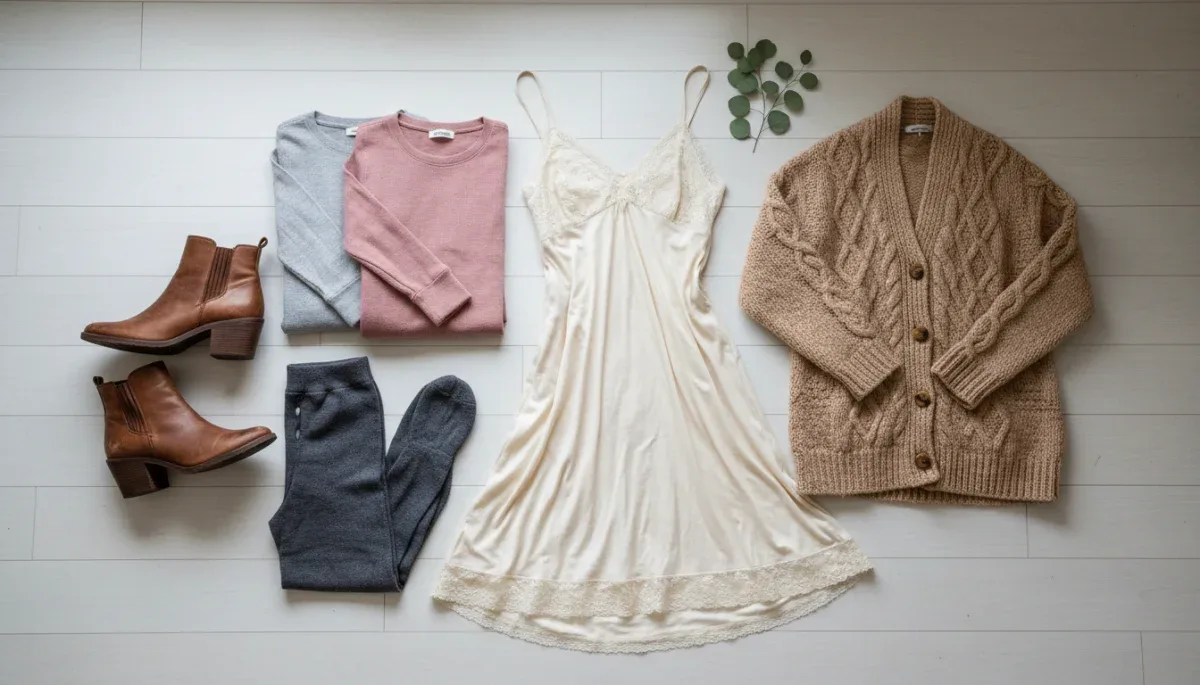
Effective under-layer combinations
- Sleeveless slips over thin turtlenecks: Creates a streamlined silhouette while keeping the chest and arms fully insulated.
- Short-sleeve wrap dresses over scoop-neck thermals: Keeps base layers hidden when you prefer an uninterrupted neckline.
- Strappy sundresses over fitted long-sleeve tees: Adds a casual 1990s-inspired structure suitable for daily wear.
Top layers and outer structure for balance
Because summer dresses are made from airy weaves, pairing them with heavy cold-weather pieces requires structural contrast. Heavy-gauge knitwear, tailored blazers, leather jackets, and long trench coats provide the necessary weight to balance floaty hems and delicate fabrics.
Cropped sweaters worn over dresses transform a full-length garment into what appears to be a skirt, effectively doubling its utility. Chunky cardigans belted at the waist define the figure and stop voluminous skirts from looking overwhelmed by thick outer knits.
Balancing volume and texture
- Structured wool blazers: Add sharp shoulders that offset loose, tiered cotton ruffles.
- Chunky cable-knit cardigans: Introduce cozy textural contrast against smooth silk or satin.
- Leather or suede jackets: Ground pastel or floral prints with an earthy, autumn finish.
Legwear, footwear, and thermal tights combinations
Exposed legs lose body heat quickly, making legwear a critical component of fall layering. Fleece-lined tights offer substantial insulation without adding noticeable thickness, while semi-opaque ribbed tights introduce seasonal texture that complements heavier knitwear.
Footwear choice determines how warm the overall outfit remains. Ankle boots, knee-high riding boots, and lug-sole loafers protect the feet from cold pavement and cover the ankles, preventing chilly drafts from entering under loose dress hems.
Legwear and boot pairings
- Fleece-lined sheer tights with knee-high boots: Delivers deep thermal protection while maintaining the visual appearance of light hosiery.
- Matte opaque tights with Chelsea boots: Creates a continuous vertical line that elongates the frame under midi hems.
- Ribbed wool-blend tights with lace-up boots: Adds durable insulation and tactile interest to casual shirt dresses.
Managing static cling and fabric friction
Pairing summer textiles with synthetic thermals or wool tights frequently creates static cling. When light cotton or viscose catches on base layers, the dress can ride up or bunch awkwardly as you walk. Taking simple precautions during assembly ensures garments drape naturally throughout the day.
Wearing a traditional anti-static slip between your thermal layer and your summer dress creates a smooth barrier that lets the outer fabric move freely. Applying a light layer of moisturizer to your legs before putting on tights can also reduce the dry friction that generates static electricity.
At a glance
| Factor | What to know |
|---|---|
| Base fabric choice | Merino wool and silk provide slim, bulk-free warmth. |
| Layering placement | Wear fitted thermal tops underneath sleeveless or slip dresses. |
| Static control | Use a smooth slip between thermals and lightweight fabrics. |
| Footwear pairing | Tuck fleece-lined tights into tall boots to block cold air. |
Frequently asked questions
Can you wear linen dresses during the fall?
Yes, you can wear linen dresses in fall by pairing darker or earthy tones with thermal tights, boots, and heavy cardigans. The textured weave of linen coordinates well with autumn knitwear when insulated properly underneath.
How do you hide thermal layers under low-neckline dresses?
Choose deep scoop-neck or V-neck thermal tops made from thin microfibers. These styles stay hidden below the dress neckline while keeping your back, core, and arms covered and warm throughout the day.
What is the best way to prevent dresses from clinging to tights?
Wear a smooth nylon or silk slip over your tights, or apply a fabric-safe anti-static spray to the hemline. Ensuring proper skin hydration before dressing also reduces static buildup caused by dry indoor air.
Do fleece-lined tights look too bulky with delicate dresses?
Modern fleece-lined tights feature smooth exterior finishes that look identical to standard 40 to 80 denier hosiery. They provide substantial warmth without creating excess volume around the calves or ankles.
The bottom line
Transitioning summer dresses into fall wardrobes requires balancing thin thermal base layers with structured outerwear, protective legwear, and anti-static measures. By layering fine-gauge merino wool, fitted tops, and fleece tights underneath lightweight pieces, you preserve the natural drape of your garments while staying warm. Before styling an outfit, check the garment care labels of both your dress and thermal layers to ensure they can be laundered together without friction damage.
Written by
Mariana Viana
Mariana Viana writes about designer spotlights and seasonal collections for getclothez.com. Each article explains how things work, compares published details such as prices, policies and program rules, and points readers to the official source before they decide.