
How to wash silk blouses at home safely
Advertisements
You can wash silk blouses at home without causing fabric damage by using cool water, a pH-neutral liquid detergent formulated for delicate protein fibers, and gentle hand movements. This method helps anyone maintain delicate wardrobe staples without paying for routine professional cleaning, though garments labeled strictly as dry clean only due to structural interfacings, pleating, or delicate linings may still require commercial care.
Silk is a natural protein fiber produced by silkworms, sharing chemical similarities with human hair. Because these fine fibers weaken significantly when wet, standard mechanical agitation, high heat, and harsh enzymes found in standard laundry detergents can easily break down the weave, strip natural lusters, or cause irreversible shrinkage. Understanding the fiber structure and using controlled hand-cleaning techniques ensures that your garments retain their original drape, color saturation, and soft texture over years of wear.
Checking the care label and testing for colorfastness
Before introducing any water to a silk garment, check the manufacturer care tag attached to the inner seam. A tag marked dry clean usually means dry cleaning is the recommended commercial method, but the garment can often tolerate gentle hand washing if the construction is simple. If the label explicitly states dry clean only, the garment may contain internal shoulder pads, glued interlinings, or dye formulations that dissolve or warp in water, making at-home washing risky.
Advertisements
When the construction allows for home care, testing for colorfastness is an essential protective step. Deep jewel tones, rich blacks, and vibrant reds often release excess dye when submerged, which can lead to color fading or blotchy streaking across lighter sections of the blouse.
Steps for a safe spot test
- Dampen a clean white cotton swab or white cloth with plain cool water.
- Press the damp swab gently against a hidden area of the blouse, such as an inside hem or interior seam allowance.
- Hold the swab in place for ten seconds and examine the tip for any color transfer.
- If dye appears on the cotton, stop the process and take the blouse to a professional cleaner instead of soaking it at home.
Choosing the right detergent and water temperature
Standard household laundry detergents rely on alkaline formulas and biological enzymes, such as proteases, designed specifically to break down protein stains like sweat, food, and blood. Because silk is an animal protein fiber, biological detergents will actively degrade the silk filaments, causing microscopic holes, thinning, and stiffness over time. Fabric softeners and chlorine bleach must also be avoided entirely, as softeners leave a greasy coating that dulls the sheen, and bleach dissolves protein fibers.
Select a gentle, pH-neutral liquid cleanser designed for silk and wool, or an unscented gentle baby wash if specialty detergent is unavailable. Cool or lukewarm water is mandatory because hot water causes the silk threads to contract, leading to severe shrinkage and permanent creasing that cannot be pressed out.
Advertisements
The step-by-step hand washing technique
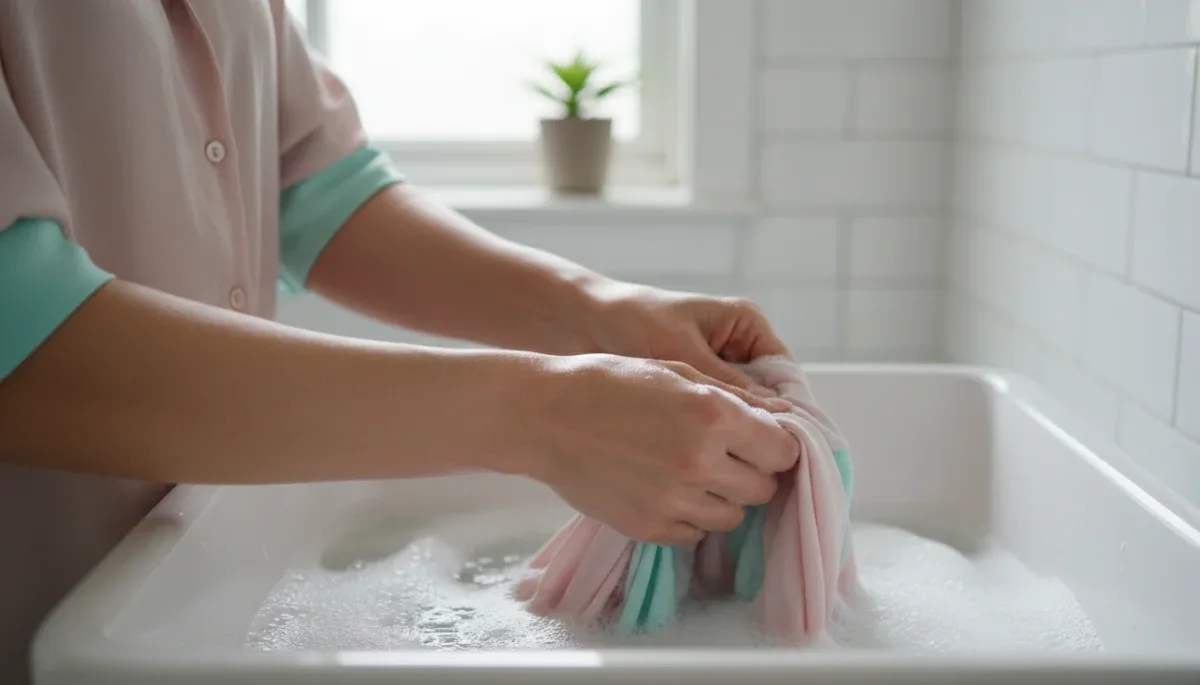
Hand washing in a basin offers the highest level of control and prevents the friction damage caused by machine washing. Ensure the sink or basin is thoroughly sanitized and free of cosmetic residues or bleach before filling it with water.
Submerge the blouse fully and keep the entire wash cycle under five minutes to prevent waterlogging the fibers, which weakens their tensile strength.
Hand washing procedure
- Fill a clean basin with cool water and mix in one teaspoon of pH-neutral delicate wash until dissolved.
- Turn the silk blouse inside out to protect the visible surface finish.
- Submerge the garment and gently swirl it through the soapy water with your hands using smooth, continuous motions.
- Press the fabric gently between your palms to work soapy water through the armpits and collar without scrubbing or rubbing.
- Drain the soapy water and refill the basin with fresh, cool water to rinse the garment thoroughly until no soap bubbles remain.
Drying and pressing silk to prevent damage
Never wring, twist, or bundle wet silk, as twisting pulls the fragile wet fibers out of alignment, causing permanent warping and puckered seams. Once the rinse water runs clear, gently press the blouse against the side of the basin to expel excess moisture without stretching the fabric.
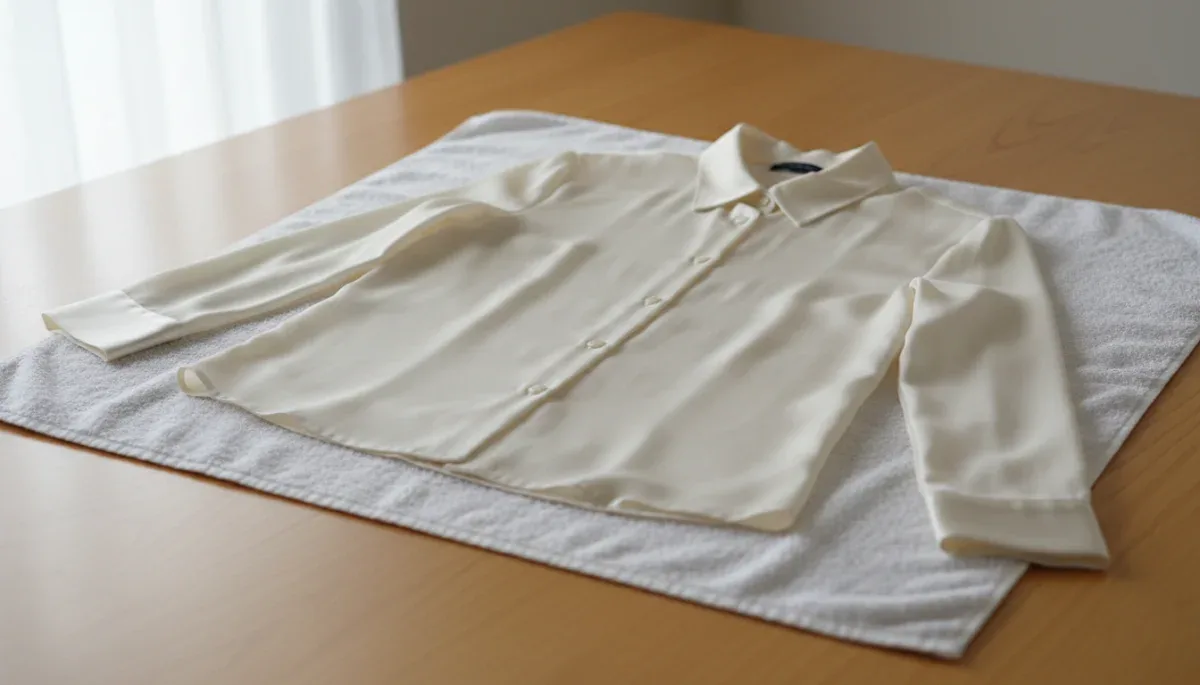
Lay the damp blouse flat on top of a clean, dry, lint-free white bath towel. Roll the towel up from one end with the blouse inside, forming a cylinder, and press down evenly with your hands along the length of the roll to absorb excess water. Unroll the towel, reshape the blouse, and lay it flat on a mesh drying rack away from direct sunlight and heat registers. Direct heat sources can bake silk fibers, leaving them brittle and prone to tearing.
When pressing the blouse, iron while the fabric is still slightly damp using the lowest silk or synthetic setting. Always place a clean cotton pressing cloth between the iron plate and the garment, or iron the blouse entirely inside out to prevent shiny iron marks.
At a glance
| Care factor | What to know |
|---|---|
| Water temperature | Use cool or cold water only to prevent fiber shrinkage and warping. |
| Detergent type | Use pH-neutral, enzyme-free delicate liquid wash formulated for natural proteins. |
| Drying method | Roll in a dry towel to absorb moisture, then dry flat away from direct sunlight. |
| Ironing technique | Press on low heat on the reverse side while the fabric remains slightly damp. |
Frequently asked questions
Can I wash a silk blouse in a washing machine?
Hand washing is safer, but you can use a machine on the delicate cycle with cool water. Place the blouse inside a fine mesh laundry bag, wash it alone or with lightweight items, and use an enzyme-free delicate detergent without spinning on high speed.
How do I remove water spots from silk fabric?
Dip the entire garment in a basin of cool water for one minute, then dry it evenly. Spot cleaning water rings individually often worsens the mark, whereas fully wetting and drying the garment redistributes moisture and eliminates visible rings.
Can white vinegar help restore shine to dull silk?
Yes, adding one tablespoon of distilled white vinegar to the final rinse water neutralizes alkaline soap residue. This process restores the natural acidity of the protein fibers, helping the fabric regain its smooth texture and subtle luster.
Why does silk turn stiff after washing at home?
Stiffness usually results from detergent residue remaining in the fibers or exposure to high water temperatures. Ensure you rinse the blouse thoroughly in clean cool water and use only minimal amounts of delicate liquid soap.
The bottom line
Washing silk blouses at home is straightforward when you avoid heat, harsh biological detergents, and mechanical agitation. By treating silk as a delicate protein fiber and opting for short, cool hand wash cycles followed by towel drying, you preserve the natural drape and luster of your clothing. Before washing any silk item at home, always inspect the garment construction and test an interior seam for dye bleeding to ensure the piece can safely tolerate water.
Written by
Maria Eduarda
Maria Eduarda writes about seasonal collections, fashion tips and outfit ideas for getclothez.com. Each article explains how things work, compares published details such as prices, policies and program rules, and points readers to the official source before they decide.